
The art that caves protect, the cultural expression of the Costa Daurada from thousands of years ago
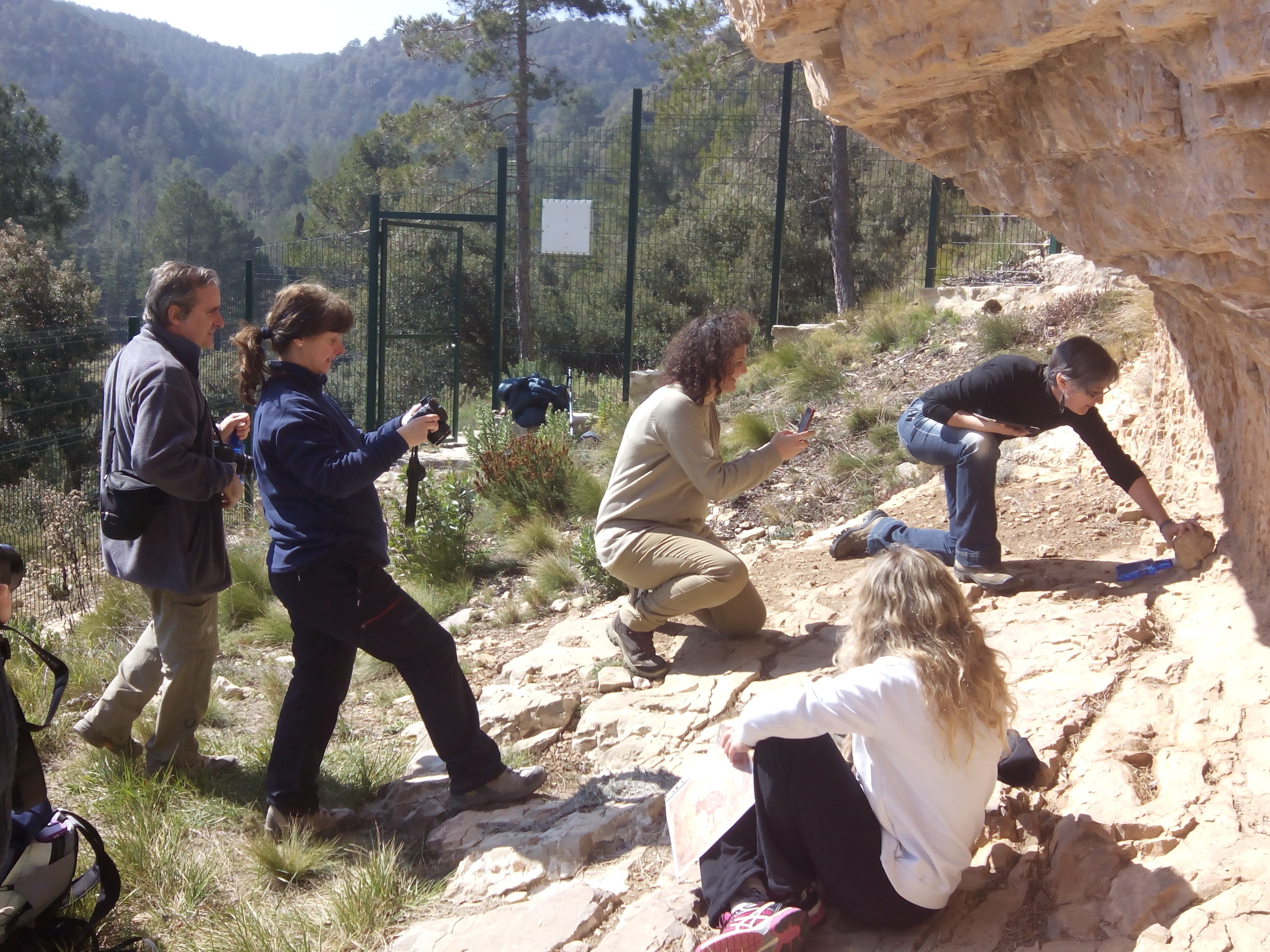
Rock paintings are the cultural expression of early societies and, wherever they existed, caves have sheltered their shapes and colours. The Costa Daurada is no exception, and the Muntanyes de Prades, a family tourism destination, hold fine examples of rock art, the so-called Levantine art, which developed during prehistory. Want to play Indiana Jones? Here is the perfect chance!
More information
The Rock Art Route includes works that in some cases date back more than 8,000 years, of great uniqueness and value, which is why they are declared World Heritage Sites. Through rock paintings we learn nuances of the relationships of prehistoric people, their hunting and gathering rituals, their connection with the spiritual world and what their artistic expressions were like, with the inherent human need to create culture and express oneself through art.
The Centre d'Interpretació de l'Art Rupestre (CIAR) is located in the former Presó Nova (New Prison) building in Montblanc and is a reference point for the research, conservation and study of rock art in the Prades mountains. It lets you discover and understand rock art, with everything that entails, through a set of paintings reproduced at full scale in a unique setting. // From the hamlet of Rojals, guided routes organised by the Montblanc Tourist Office set out periodically, on which you can also discover the hidden corners of the town where there are rock paintings. The route lasts three hours and is the ideal complement to a visit to the Centre d'Interpretació de l'Art Rupestre de les Muntanyes de Prades.
The caves of l'Espluga, in l'Espluga de Francolí, will not leave you indifferent either, both for their geological richness and for the human history lived there. The space that is now the Cave-Museum was inhabited from the Middle Palaeolithic until Roman times. Later, several collapses hid its entrances and exits until 1857. Now a virtual archaeologist and a guide explain how this place was formed and how early humans lived there. It is one of the seven longest conglomerate caves in the world, with 3,590 metres of discovered passages and an underground river. The most daring can venture into its depths on the Adventure Route, in which, dressed in a wetsuit, they can wade up the underground river and discover all its secrets.
In short, if you want to discover where we come from and how our earliest ancestors lived, on the Costa Daurada you will find corners and experiences that will not leave you indifferent.