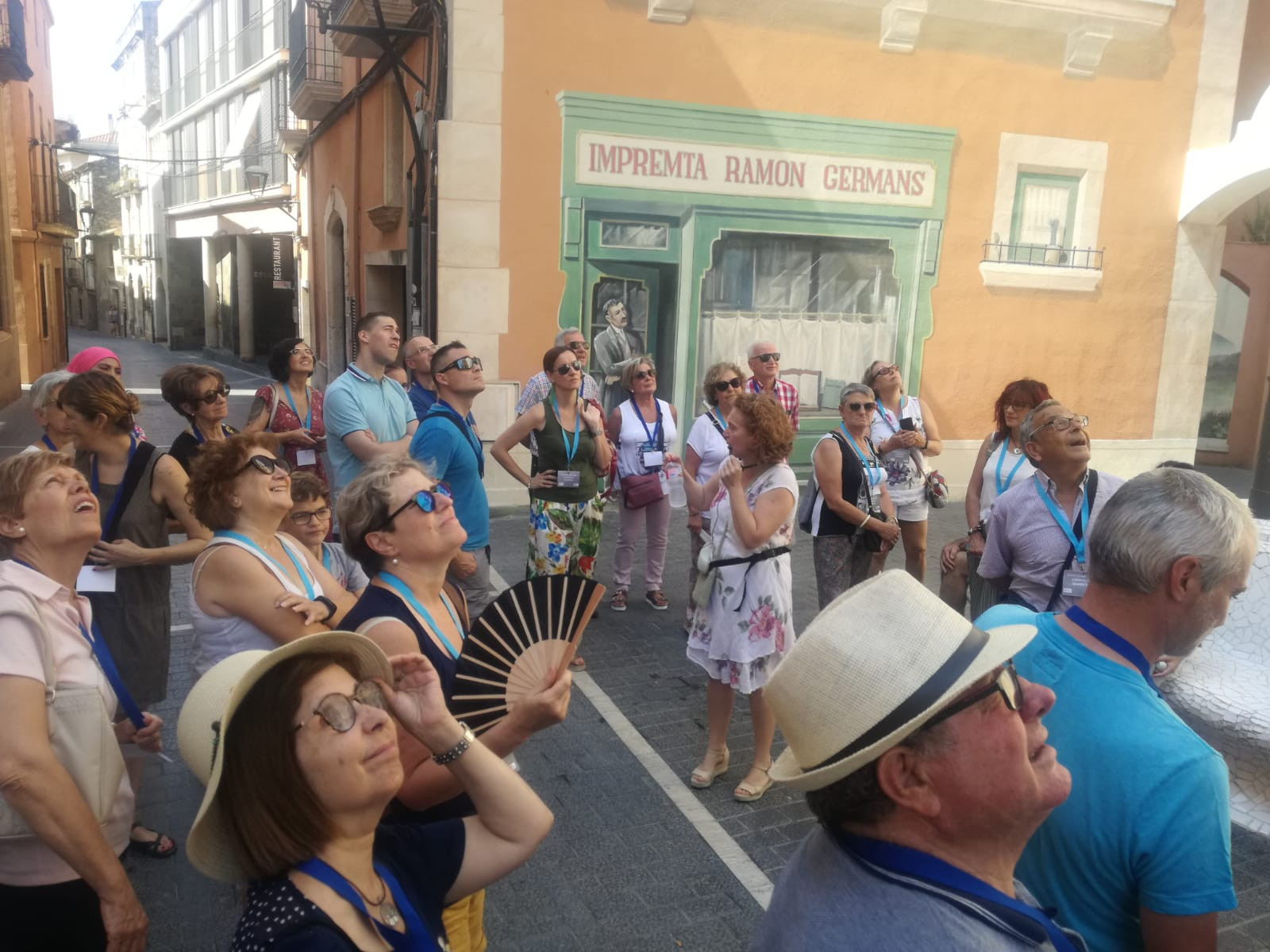
Discover the origins of Coma-ruga
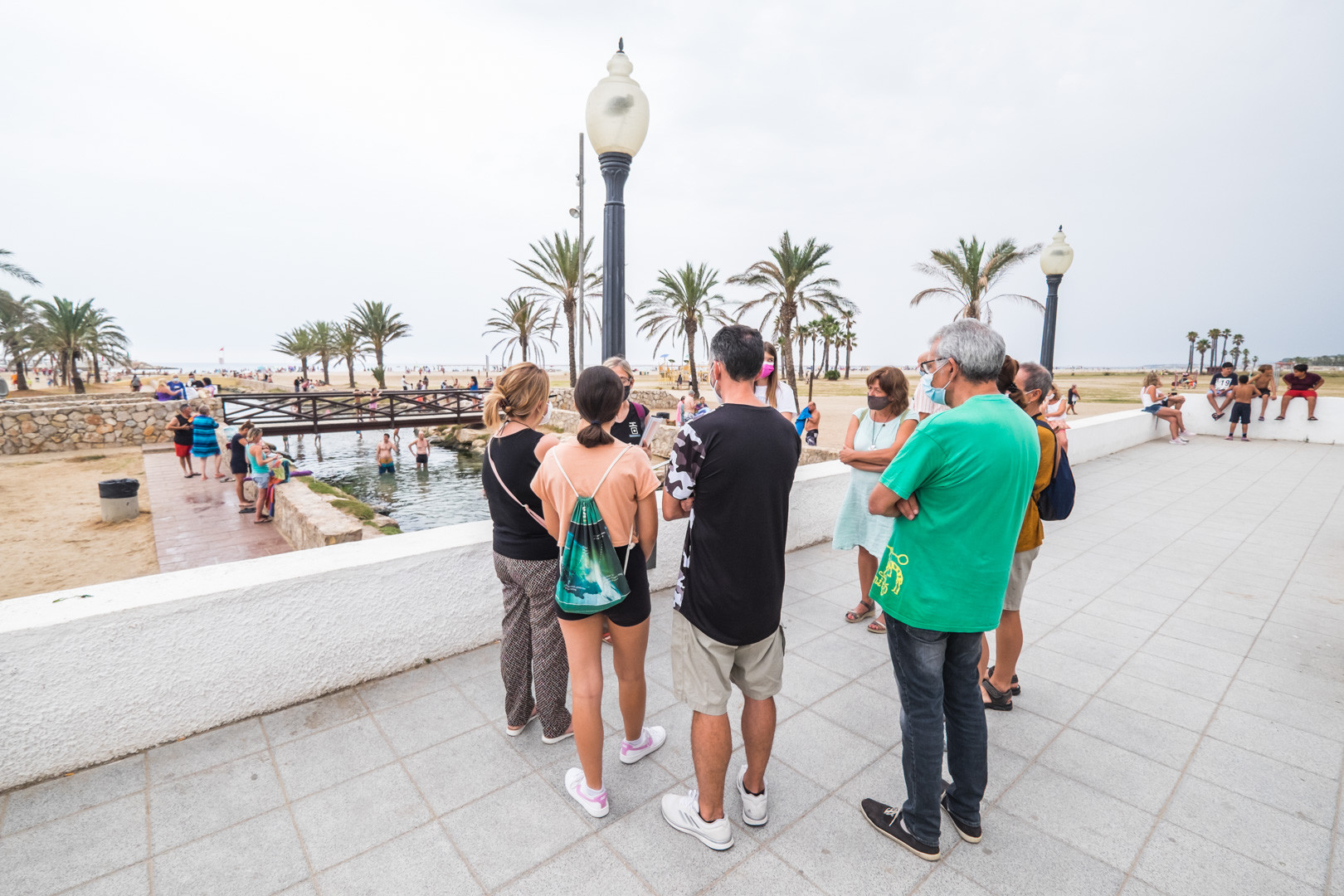
Come and discover the origins of the Coma-ruga district. How did marshy areas become grand avenues? How did reeds and mud turn into the old bathing huts?
You will relive the past through old photographs, learning about the spas that once stood on the seafront and have since disappeared, the indiano houses, the American adventure of the Trillas brothers, the story of the motorcycle racer Ramon Torras....
More information
You will also walk to the Church of Sant Ramon to see the mosaics by the artist Santiago Padrós that recall the Coma-ruga of the 1960s and 1970s.
The activity adapts its explanations to the age of the participants, and children are given a treasure hunt game to follow along with the explanations.
El Vendrell, a Family Tourism Destination
The Catalan Tourist Board has awarded El Vendrell the Family Tourism seal, thanks to the large number of facilities and services adapted to the needs of families with children. It also has a wide range of cultural and leisure activities for families, which you can find on the El Vendrell Tourism website.
Follow the life of Pau Casals
Recognised as one of the greatest cellists of all time, Pau Casals was born in El Vendrell, in a humble house open to visitors, where you can follow the musical beginnings and childhood of this great maestro. Later, he moved to live by the sea, in what is now the Vil·la Museu Pau Casals, which is part of the Paisatge dels Genis route and where, through audiovisuals and personal objects, you will get to know the house, life and work of this illustrious native of El Vendrell. Finally, if you get the chance, take the opportunity to attend some of the many concerts held every year at the Auditori Pau Casals.
The wide variety of wines of the DO Penedès
Between the provinces of Tarragona and Barcelona lies the DO Penedès, the best known of all the Catalan appellations. We recommend visiting some of the wineries in this wine-producing area that have features that make them unique, such as those located in the mountains, others right by the sea, those located on the ancient Roman Via Augusta or those that separate their vineyards with dry-stone walls, declared World Heritage.