
04 - A SEA OF VINEYARDS IN CAPÇANES
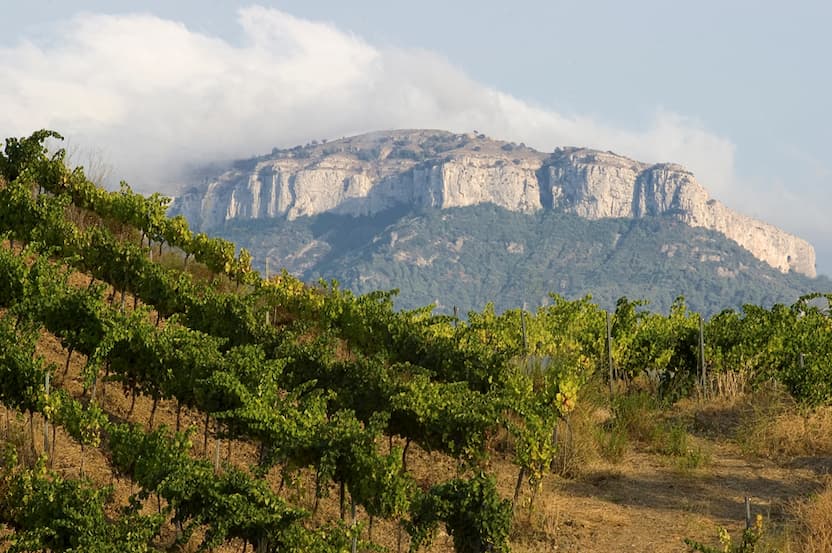
In the south of the Priorat, within the Montsant DO area, lies the Serra de Llaberia, with the iconic Mola de Colldejou, which separates the region from the coast. Even so, sea breezes slip through the passes and cool the fields of the Priorat. At the foot of the Serra de Llaberia are the villages of Capçanes and Marçà, land of farmers and charcoal burners, such as the well-known guerrilla fighter Carrasclet.
- Distància
- 11 km
- Desnivell
- +250 m
- Durada
- 3 h 30 min
- Dificultat
- intermediate level (blue)
- Senyalització
- Priorat path network signposting
Description
On this hike full of contrasts, you will walk through the sea of vineyards of the villages of Capçanes and Marçà, where abandoned fields sit alongside fields carefully worked by our farmers. The outward leg to Marçà runs through wild, lonely country, with long views, and you will discover the remains of the old farmland that once covered much of today's forests, along with the remains of a lime kiln. On the way back to Capçanes you can enjoy the plains still carefully cultivated, where the sea of vineyards mingles with olive and almond trees. It is a journey from the past to the present, which we invite you to combine with a guided visit and wine tasting at Capçanes winery, an example of the tireless collective work of the farmers of Capçanes and world-famous for its kosher wine, made following the standards of Jewish tradition.
The more adventurous can also enjoy the route around the Les Taules area, near the village of Capçanes, a place with a great concentration of dry-stone elements (huts, cisterns, terrace walls, beehive shelters and windbreaks).
Technical information
Distance: 11 km
Elevation gain: +250 m
Duration (approx.): 3 h 30 min
Difficulty level (colour): intermediate level (blue)
Signposting: Priorat path network signposting
Les Taules, an area of Capçanes to the east of the town centre, holds a great variety of dry-stone constructions, from walls to huts, including sheepfolds, small niches, lime kilns and terrace walls dividing fields. This type of building, found throughout the regions of the Costa Daurada, has been declared Intangible Cultural Heritage of Humanity by UNESCO. If you like, you can take the Capçanes dry-stone circular route, suitable for children and families, which is easily walked in under two hours.
Opened in 1891, the railway played a key role in marketing wine and raising its quality. What remains of this means of transport has therefore become part of the wine landscapes. The Train Bridge in Capçanes is one of them.
The narrows of the Riera de Marçà are one of the geological wonders you will find on the Costa Daurada, between the municipalities of Marçà and Capçanes, in the Priorat. Although water is hard to find there, because the limestone soil filters it, the passage of water over the years has shaped the limestone rocks into rounded, extremely smooth forms. Halfway up the left-hand slope runs the path from Marçà to Capçanes through the Molí del Barceló.