
06 - THE HAZELNUT LANDSCAPES OF THE TARRAGONÈS
Hazelnut growing has a long tradition in the Camp de Tarragona; the oldest documentary reference dates from 1287, in the municipality of Alforja (Baix Camp). Over the centuries it was always a secondary mountain crop, first grown behind the cereals, later behind the vines. However, the phylloxera crisis and the resulting disappearance of the vineyards pushed the hazelnut tree to first place, taking it out of its mountain refuge and spreading it across the plain, until it reached its peak in the 1970s, with Reus as the sole centre of trade and export. Spain's entry into the EU in the 1980s, however, brought the crop's definitive crisis, with a significant drop in prices; the hazelnut tree could only disappear or reinvent itself. Today, the hazelnuts produced in these lands are sold under the DO Avellana de Reus.
- Distància
- 5.5 km
- Desnivell
- +20 m
- Durada
- 1 h 40 min (walking time)
- Dificultat
- beginner level - green
- Senyalització
- municipal trail signposting
Description
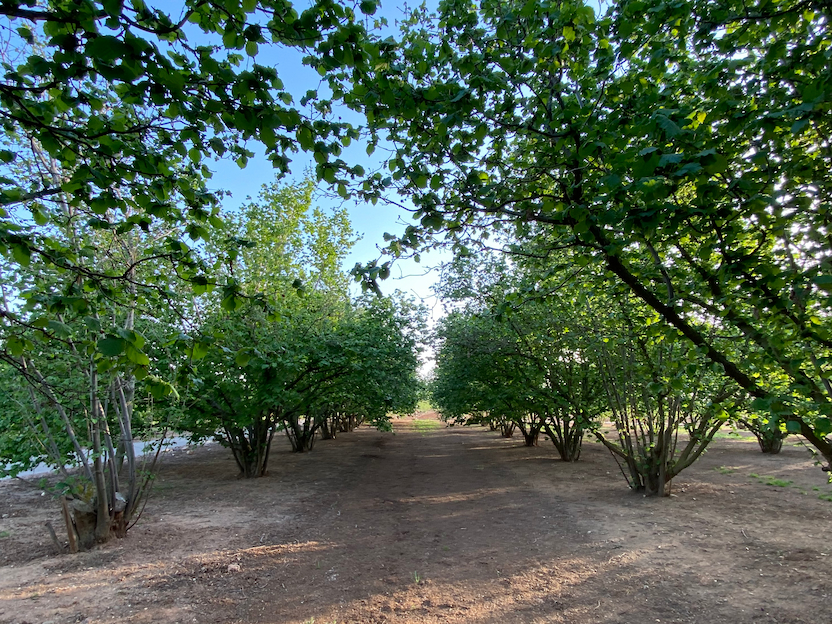
On this hike we invite you to walk among genuine hazelnut groves in the municipalities of El Morell and Vilallonga del Camp, in the Tarragonès, on the fertile cultivated plain of the Camp. Among fields, ravines and old farmhouses you can admire the dense network of orchards, some with very tall trees that in summer let not a single ray of sunlight through their leaves. Thanks to their minerals, proteins and healthy fats, hazelnuts are one of the best energy-giving foods for hikers. We hope our hazelnuts give you the strength to discover and taste this land!
Technical information
Distance: 5.5 km
Elevation gain: +20 m
Duration (approx.): 1 h 40 min (walking time)
Difficulty level (colour): beginner level - green
Waypointing: municipal trail signposting
El Morell, one of the towns of the Tarragonès and the Costa Daurada with the largest area of hazelnut cultivation, also stands out for its heritage buildings, among them this large rectangular mansion with three balconies and a segmental-arched entrance portal. The Casal dels Montoliu displays beautiful sgraffito decoration on its façade. Dating from the 18th century and Baroque in style, the Casal dels Montoliu stands on lands that belonged to the Lordship of El Morell, created in 1113 by the Archbishop of Tarragona and King Alfonso I, and is declared a Cultural Asset of National Interest. Today it is the seat of El Morell Town Hall.
This is a Rationalist building in El Morell, dating from 1926 and included in the Inventory of the Architectural Heritage of Catalonia. Built by the architect Pablo Montsió, it stands below the garden of the Casal dels Montoliu.
Neoclassical in style, the church of Sant Martí is a large building standing in the most prominent spot on the square that bears the same name. Built in the 18th century, it is protected as a Cultural Asset of Local Interest.
Another option in Vilallonga del Camp is to visit its new Cinema Museum, opened in 2018. Located in the Civic Centre, it is the first museum devoted to film on the Costa Daurada. Visitors will find a wide range of material related to the seventh art, from the collection of Josep Maria Vallès, who has been linked to the town's cinema for more than forty years.
Within the municipality of Vilallonga del Camp stands the hermitage of the Mare de Déu del Roser. Although its construction date is unknown, Francesc Blasi Vallespinsa, in his book "Santuaris Marians …", says it is possible that the Vilallonga hermitage was the first in the diocese with this dedication. It has now been restored, and the Gothic paintings in the presbytery and the craftwork shine once again.