
From Querol to the summit of Montagut
In the Alt Camp comarca, on the Costa Daurada, there are some very worthwhile hikes. One of them goes from Querol to the summit of Montagut, at 955 metres. We suggest this route because it combines scenic value with historical value, taking us back to the 19th century, when Catalonia was caught up in the Carlist wars.
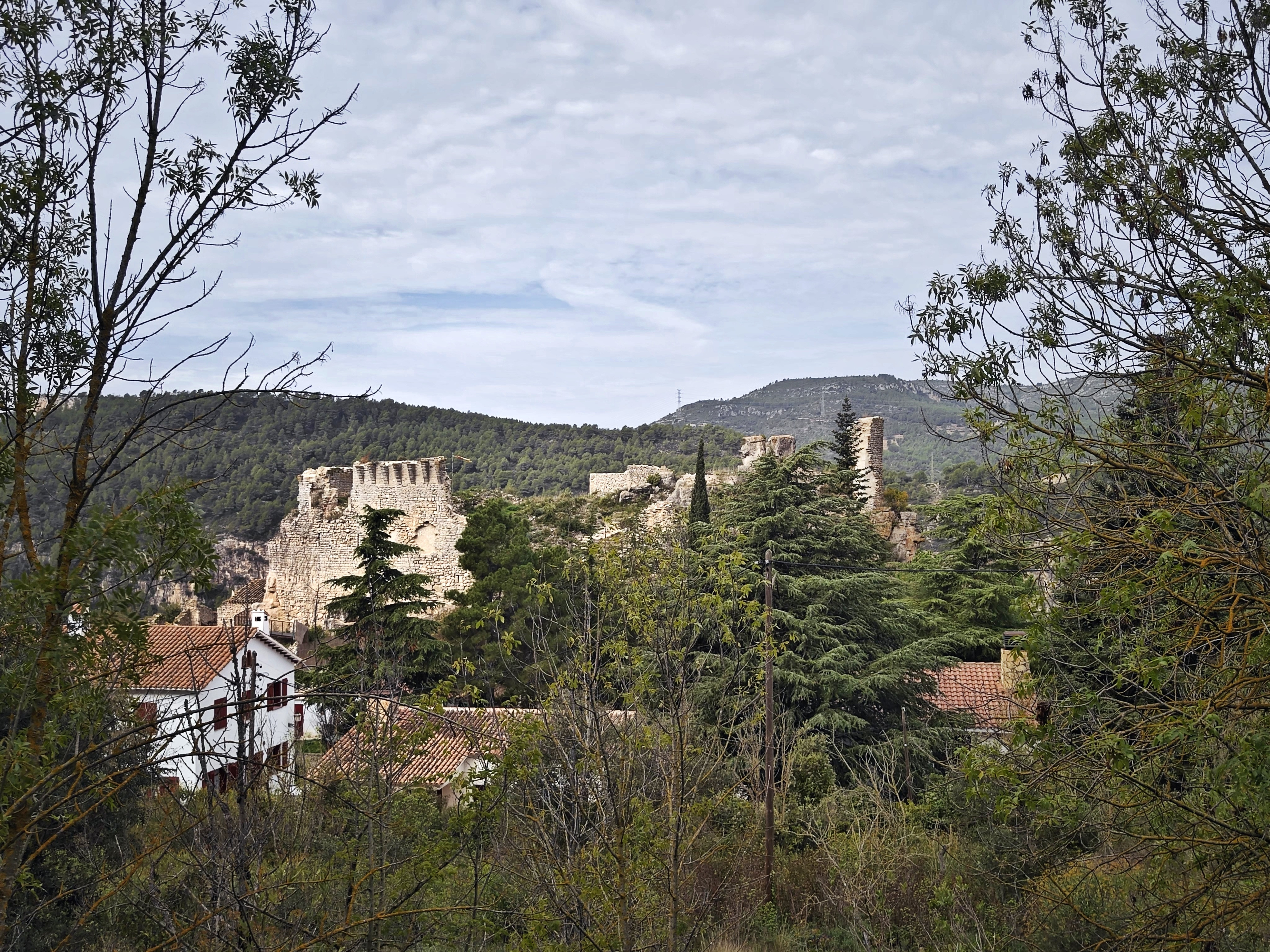
Following the steps of user Miquel Garriga, we start the route at Querol Castle, at 540 metres, where the walk begins. The castle stands on the crag above the village and has been in ruins since 1835, when it was blown up with eight barrels of gunpowder after the furniture had been removed. This happened because it had been occupied by the Carlists. The castle dates back to the mid-10th century and is documented as having been sold to Hug de Cervelló, together with the castles of Pinyana and Montagut, giving rise to the Cervelló lineage. We pass in front of the remains of the Mas de Cal Requesens. Along a dirt track, without a single sign of human presence, we approach the summit of Montagut, with its striking conical shape, completely covered in trees. At its foot stands the magnificent church of Sant Jaume de Montagut, which had fallen into ruin. Now restored, it presents an extraordinary image with its polygonal apse, its two bell gables and its doorway with three round arches in gradation. As late as the mid-19th century, Montagut was a parish made up of scattered houses that produced wine and pulses and had a flour mill. Nothing remains of that settlement.
From here we have a magnificent view of the Pla de Santa Maria, above which lies the Coll de Cabra, where Almanzor's army passed when it went up to sack Barcelona in July 985. The Coll de Cabra is important because it lies on the natural pass between the Conca de Barberà and the Pla de Santa Maria, territories that allow a rapid advance. The strategy of the raid was to move quickly, attack, seize loot and leave, and the natural passes made that possible. The network of castles of the Hispanic March built across this territory was meant to watch troop movements and warn of their presence. Montagut Castle was one of them.
Now it is time to come down from the hill. For this we can take the GR 172 on a steep but easy descent until we reach a paved track, which we follow to the right. Among some pines we still see the sharp cut through which the river Gaià flows as we head back towards Querol. On the right we leave a corner called Racó de Sant Bernat, with a stone neatly placed as a seat and an upright, sculpted juniper.
It is also worth noting that at the foot of the village of Querol, beside the Camí de les Terres of the river Gaià, there are some vegetable gardens with the Font de l'Hort or Font de la Tous and a pond that is worth visiting if you have time. Water spills out at several points in this area, which makes it especially interesting for amphibians. For this reason, and as part of the Territori Salamandra (Salamander Territory) project, this area has been restored as a habitat for these animals, and in particular for the salamander. This agreement was signed thanks to the support of the Querol Town Council and the Consell Comarcal de l'Alt Camp.