
The dry-stone route of Cunit
The Costa Daurada is one of the areas of the Mediterranean with the most dry-stone structures. Being a durable material, together with the scarce spontaneous vegetation and little rainfall, has helped preserve terrace walls, vineyard huts, corbelled huts, ponds and windbreaks. These are structures of great historical value, as they characterise our most agricultural landscapes, above all those of olive, vine, almond and cereal crops, fully adapted to the soils and climate. That is why we have selected this route in Cunit for you.
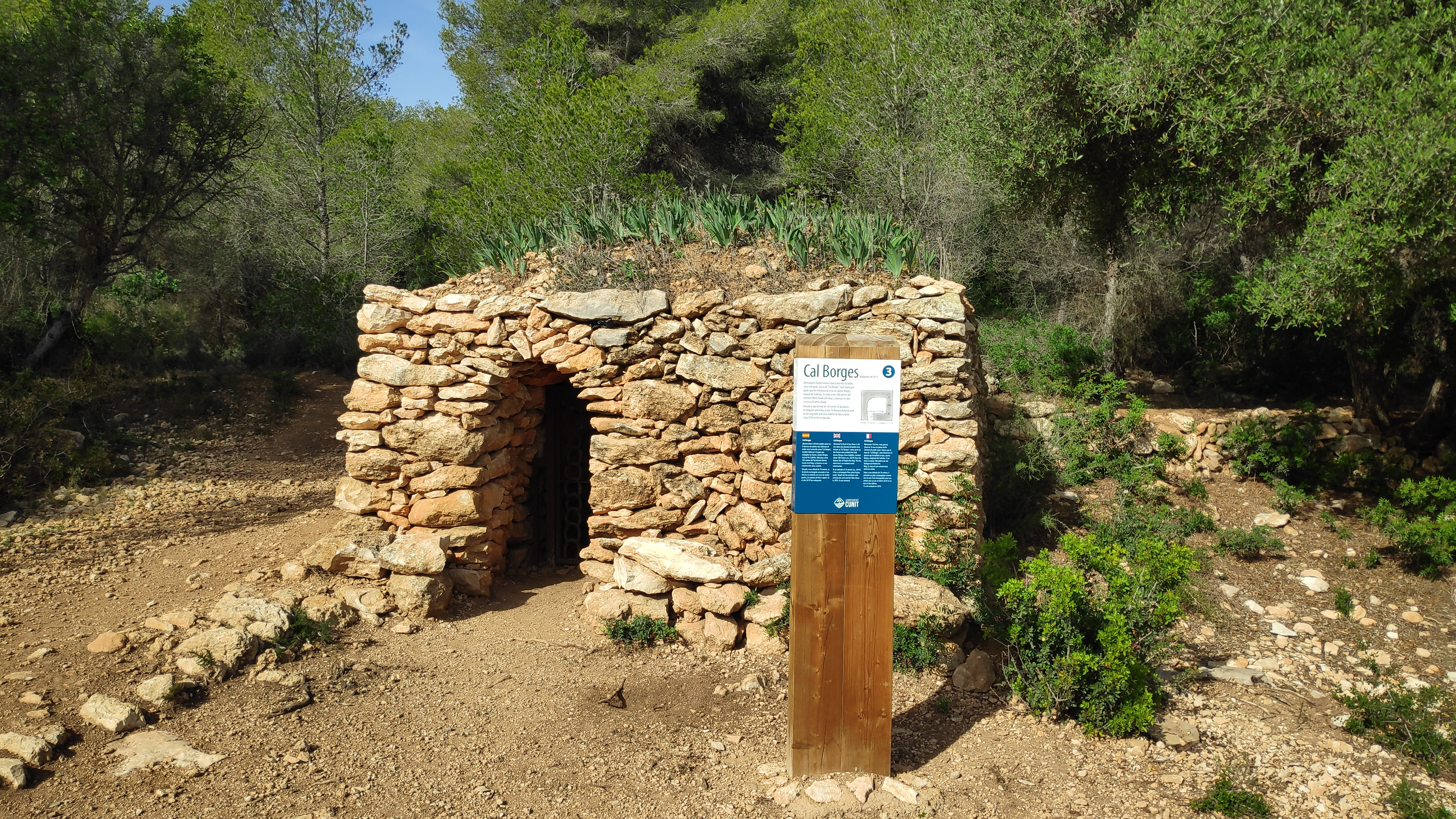
This is a route created by the Consell Comarcal del Baix Penedès which has prepared the content, although the route is not yet signposted on site. The route starts at the Cunit Tourist Office and covers nine kilometres in about two hours. It is a circular itinerary within the municipality of Cunit that lets you discover the dry-stone structures, listed by UNESCO as Intangible Cultural Heritage of Humanity. These structures are very representative of the municipality, and you can see them along a flat route among farmland. Among the structures along the route, the best known is the Cal Ros hut, next to a very large terrace wall at the Fondo del Cove. You will also find several huts such as Cal Gravat, Cal Borges and the Bargalló hut. In general they are above-ground structures built against the terrace wall, rectangular in plan and roofed with wooden beams and stone slabs.
The dry-stone structures, which survive in varying states of repair, are the legacy of the farmers who made rural life possible, and which today, with the shift in the socioeconomic paradigm, has unfortunately lost relevance. That is why it is vitally important to preserve these structures and make them known through routes like this one.