
DO Cava
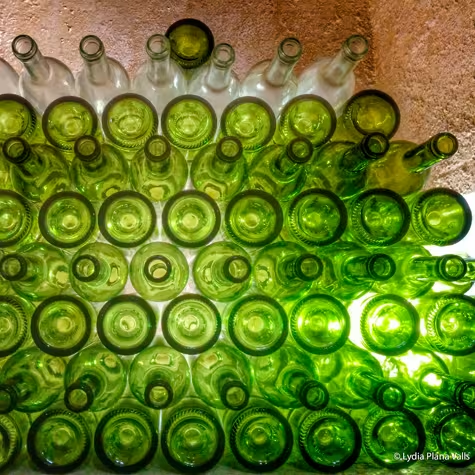
Why is it special?
Louis Pasteur's microbiology studies applied to wine made it possible to control the second fermentation in the bottle, and the discovery of the cork stopper meant that the bubbles were not lost. Thus was born the traditional method or champenoise, a technique that during the nineteenth century several families in Sant Sadurní d'Anoia applied to crops. With the trials of the Catalan Agricultural Institute of Sant Isidre, they opted for the native varieties of white grapes, from which cava was born. In 1872, Josep Raventós, from Codorniu, produced the first 3,000 bottles of cava according to the method of second fermentation. His son and heir, Manuel Raventós, began the expansion of the company, while other producers also began to make cava. During the 1920s, cava gained strength in the market, and was consolidated internationally in the eighties. Today it is one of the most dynamic sectors, with a production of more than 200 million bottles per year.
What can be done about it?
On the Costa Daurada there are several wineries that open their doors to the visitor. The cava cellars dot the fields and allow you to know the process from the inside from the vineyards to the press and bottling. For example, you can visit the Nulles Winery, one of the wine cathedrals of Catalonia, which has recently been awarded for making a delicious sparkling wine. Very close to our regions, Sant Sadurní d'Anoia is recognized as the capital of cava. A visit to the Codorniu cellars, by the modernist architect Puig i Cadafalch, with 26 kilometres of underground cellars, as well as the Freixenet, Torelló, Raventós i Blanc and Gramona cellars, is a must. The Cava Week held in Sant Sadurní, serves to promote this product in Catalonia. Of the festive events, the coronation and proclamation of the queen of cava, the route of the cava train and the Cavatast, a sample of cavas and gastronomy of the Penedès, stand out.
Grapes with DNA :
DO Cava
The white grape varieties, Trepat and also some red grapes are suitable for the production of cavas. On the Costa Daurada, Macabeus, Xarel·los, Malvasies or Chardonnays are grown, which are used as a base for the production of cavas within the DO Cava.
REGULATORY COUNCIL OF THE CAVA DESIGNATION OF ORIGIN
Av. Tarragona, 24
CP 08720, Vilafranca del Penedès
Tel. 938903104 Fax: 938901567
consejo@crcava.es
www.crcava.es
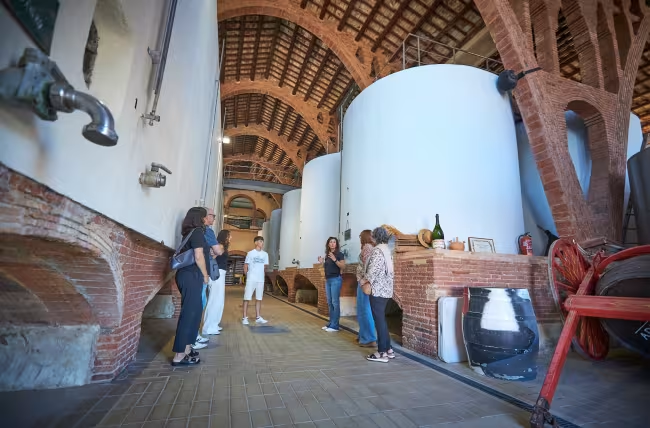
After hundreds of years with plantations and family winemaking, the inhabitants of Nulles, during the second decade of the twentieth century, decided to join their resources and knowledge to create…
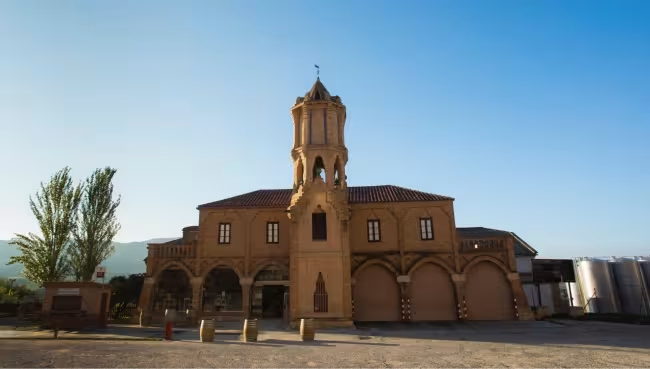
Pioneers and inspirers. The origin of our agricultural cooperativism. In the town that saw the birth of the first cooperative winery experience in all of Spain, Cèsar Martinell built the building…
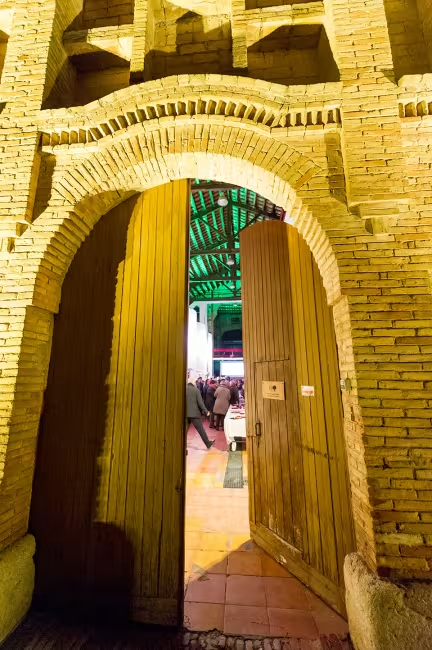
In 1920 the architect Cèsar Martinell designed the winery of Llorenç del Penedès, which had two naves with an oil mill and a warehouse.
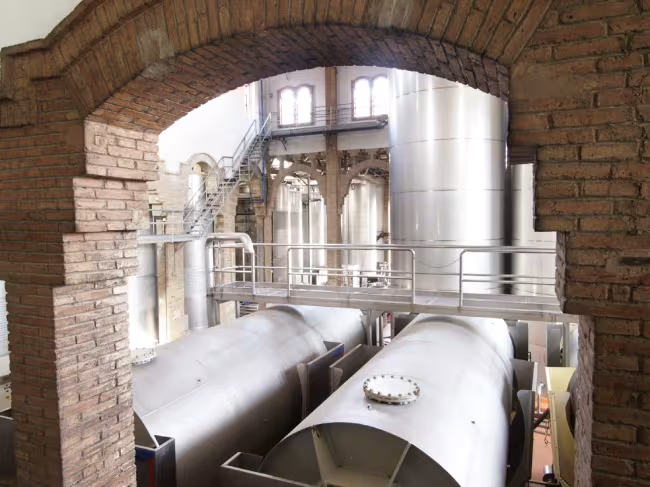
Winery that becomes a magnificent example of modernist architecture, located in the middle of the Ruta del Cister, very close to the Royal Monastery of Santes Creus. With a wide main façade and two…
This winery produces wine and cava under the Conca de Barberà Designation of Origin and the Cava Designation of Origin. Visits in Catalan, Spanish, English, French and German. Maximum 20 people per…
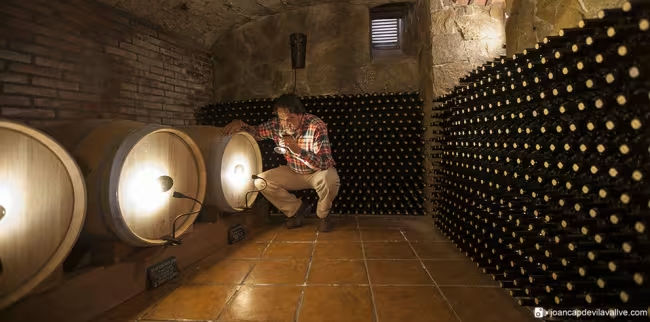
Ronadelles winery produces wines under the DO Montsant, DOQ Priorat, DO Catalunya and DO Terra Alta, as well as cavas. Ronadelles winery offers a guided visit with wine tasting in the winery's ageing…
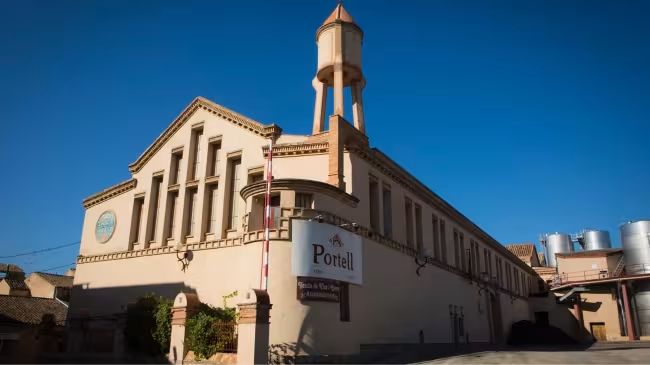
Designed by the illustrious architect Pere Domènech i Roura and built in 1914, the winery is the fruit of the local farmers' collective effort to raise a rational building of great architectural…
This winery produces cava under the Cava Designation of Origin. Visits in Catalan and Spanish. Maximum 60 people per group.
This winery produces wines of Cava DOC Denomination of Origin. Visits in Catalan and Spanish. Maximum 50 people per group. Visits must always be arranged in advance.
This winery produces cava under the Cava Designation of Origin. Visits in Catalan, Spanish and French. Maximum 50 people per group.
This winery produces cava under the Cava Designation of Origin. Visits in Catalan and Spanish. Maximum 10 people per group.
This winery produces wines of Cava DOC Denomination of Origin. Visits in Catalan, Spanish, English and French. Maximum 30 people per group. Visits must always be arranged in advance.
This winery produces cava under the Cava Designation of Origin. Visits in Catalan and Spanish. Maximum 30 people per group.
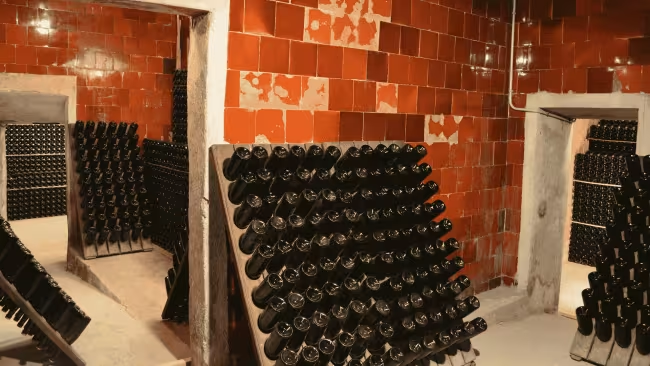
Discover Cava Vives Ambròs, a family winery in Montferri (Alt Camp, Tarragona), specialising in long-aged artisan cava. The wine tourism experience includes a guided visit to the underground cellar…
This winery produces wines of Cava DOC Denomination of Origin. Visits in Catalan, Spanish and English. There is no maximum size for groups. The visit must be arranged in advance.
This winery produces cava under the Cava Designation of Origin. Visits in Catalan, Spanish, English and French. Maximum 30 people per group.
This winery produces wines of Cava DOC Denomination of Origin. Visits in Catalan, Spanish and English. Maximum 25 people per group. Visits must always be arranged in advance.
This winery produces wines of Penedés and Cava DOC Denomination of Origin. Visits in Catalan, Spanish, English and French. Maximum 20 people per group. Rhe winery is located in the L'Alt Penedès…
This winery produces wine and cava under the Conca de Barberà Designation of Origin and the Cava Designation of Origin. Visits in Catalan, Spanish and English. Maximum 60 people per group.
This winery produces wine and cava under the Conca de Barberà Designation of Origin and the Cava Designation of Origin. Visits in Catalan, Spanish and English. Maximum 15 people per group.